

Understanding the Recommended Service Schedule for 2026 Mercedes-Benz Vehicles
Proper maintenance is essential to keeping your 2026 Mercedes-Benz performing at its peak, ensuring reliability, safety, and longevity. Unlike many older vehicles that relied solely on mileage, modern Mercedes-Benz models incorporate a condition-based monitoring system called ASSYST PLUS. This system tracks parameters such as engine performance, fluid quality, and component wear to alert drivers when maintenance is due, helping avoid unnecessary service visits while ensuring critical upkeep is performed promptly.
For owners in El Cajon and surrounding communities like La Mesa and Bonita, understanding how Mercedes-Benz structures its service schedule is the foundation for protecting your investment.
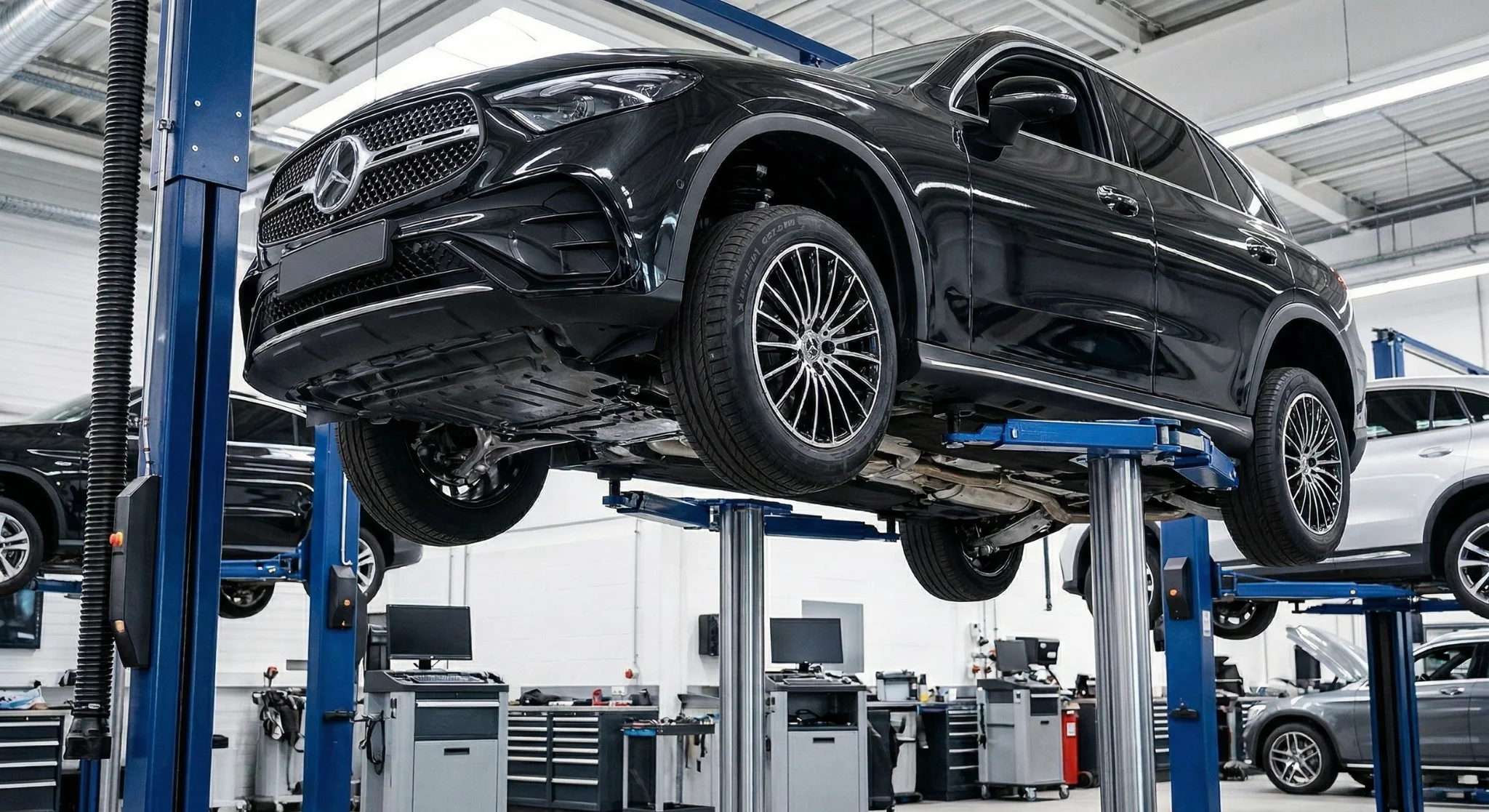
How Mercedes-Benz Service A and Service B Work
Mercedes-Benz organizes routine maintenance into two alternating service intervals: Service A and Service B. Service A is your first major maintenance milestone, recommended at approximately 10,000 miles or one year, whichever comes first. From there, Service B follows at approximately 20,000 miles or two years. You continue alternating between Service A and Service B at every 10,000-mile interval throughout the vehicle’s lifespan.
Service A — 10,000 Miles / 1 Year
Oil and filter change, multi-point inspection, fluid level checks and corrections, and brake component inspection. This is your essential maintenance foundation.
Service B — 20,000 Miles / 2 Years
Everything in Service A plus additional inspections of the steering, suspension, and driveline systems, as well as cabin filter replacement. A deeper look under the hood.
The exact services performed can vary depending on your specific model, engine type, and driving conditions. Vehicles driven primarily in stop-and-go traffic around San Diego or in the hilly terrain near Bonita may trigger ASSYST PLUS alerts sooner than the standard mileage interval. Mercedes-Benz uses high-quality synthetic oil specifically formulated for its engines, which provides superior stability under extreme temperatures and extends the intervals between oil changes compared to conventional oils.
Milestone Maintenance: 30,000 Miles, 60,000 Miles, and Beyond
Beyond the alternating Service A and Service B appointments, Mercedes-Benz schedules more comprehensive inspections and replacements at key mileage milestones.
| Milestone | Key Service Items |
|---|---|
| 30,000 Miles | Service A appointment plus engine air filter and cabin air filter attention. Brake fluid replacement is generally recommended every two years, regardless of mileage. Thorough inspection of early-wear components. |
| 60,000 Miles | Spark plug evaluation and replacement (iridium/platinum plugs last 60,000–100,000 miles). Inspection of suspension, steering, fuel system, and cooling system. Transmission fluid service (generally recommended between 60,000–80,000 miles). Drive belt and brake pad evaluation. |
| 90,000+ Miles | Electrical system, belts, hoses, transmission, and drivetrain component examination. Comprehensive system diagnostics and preventive replacement of wear items. |
Staying consistent with these milestone services helps prevent costly repairs and keeps all systems functioning as designed.
Maintenance Needs for Electric Mercedes-Benz Models
The maintenance requirements for electric Mercedes-Benz models differ significantly from traditional internal combustion vehicles. For 2026 electric models in the EQ lineup — including the EQS, EQE, and EQB — the service schedule focuses on the battery system, electric motors, and associated electronics, while requiring less frequent attention to conventional engine-related components.
One of the primary maintenance considerations is the health of the high-voltage battery pack. Routine inspections include monitoring battery performance metrics, state of charge, and thermal management systems. The battery cooling system must be checked and serviced periodically to prevent overheating and maintain efficiency. Electric motors and power electronics also require diagnostic evaluations to detect any anomalies, with Mercedes-Benz onboard diagnostic systems enabling precise monitoring.
Reduced Brake Wear
Regenerative braking extends the lifespan of brake pads and rotors, meaning replacements occur less frequently than on conventional vehicles.
Battery Health Monitoring
Routine inspections track battery performance, state of charge, and thermal management systems to maintain peak efficiency.
Software Updates
Routine software updates enhance system efficiency and add new features during your scheduled service visits.
Cabin air filters and other standard maintenance parts still require periodic replacement. Brake fluid replacement still follows the standard two-year interval. Overall, electric Mercedes-Benz vehicles benefit from a tailored maintenance schedule that prioritizes battery and electrical system health while reducing some traditional service demands.
Transmission Care: Fluid Change Versus Flush
Transmission Fluid Change
Drains old fluid from the transmission pan and replaces it with fresh fluid. This process typically replaces about half of the total fluid volume, as some fluid remains in the torque converter and transmission lines. It is a recommended routine service that helps maintain smooth shifting and prevents premature wear.
Transmission Flush
A more comprehensive procedure that uses specialized equipment to circulate new transmission fluid through the entire system, effectively replacing nearly all the old fluid and addressing buildup in hard-to-reach areas. Must be applied cautiously in newer Mercedes-Benz models.
For 2026 Mercedes-Benz vehicles, the manufacturer’s service recommendations generally favor scheduled fluid changes at designated intervals rather than routine flushing. For owners in El Cajon and nearby areas, following the prescribed maintenance schedule helps avoid potential transmission issues and keeps the vehicle operating at peak efficiency. If you are considering a transmission flush, consult with certified technicians familiar with Mercedes-Benz transmissions to assess whether it is appropriate based on your vehicle’s condition and mileage.
Benefits of Synthetic Oil for 2026 Mercedes-Benz Engines
Temperature Stability
Synthetic oil resists breakdown and maintains lubricating qualities far better under extreme heat generated by modern engine designs — essential for preserving engine components during both city driving and highway cruising.
Reduced Engine Wear
The uniform molecular structure forms a more consistent lubricating film, reducing friction between moving parts. For Mercedes-Benz engines with precise engineering and tight tolerances, this consistent protection maintains optimal efficiency and power output.
Cleaner Engine Performance
Fewer impurities and advanced additives prevent sludge buildup — especially valuable in areas like Bonita and Chula Vista, where stop-and-go traffic and higher ambient temperatures can accelerate oil degradation. Cleaner engines contribute to better fuel economy and lower emissions.
Extended Oil Change Intervals
Synthetic oil extends the interval between oil changes without compromising engine protection, aligning well with the recommended service schedule for 2026 Mercedes-Benz models and reducing the number of service visits required.
Why Service Your Mercedes-Benz at a Dealership
Factory-Trained Technicians
Dealership technicians receive training specifically for Mercedes-Benz vehicles, ensuring accurate diagnostics, precise repairs, and maintenance that adheres strictly to manufacturer guidelines.
Genuine Mercedes-Benz Parts
Designed to meet stringent quality standards and integrate seamlessly with your vehicle’s systems, maintaining optimal performance and reducing the risk of compatibility issues.
Latest Diagnostic Tools
Access to exclusive software updates and specialized equipment to service the sophisticated electronic systems in modern Mercedes-Benz models.
For owners in communities like La Mesa and Bonita, where climate and driving conditions vary, maintaining the integrity of your vehicle with factory parts and certified expertise supports long-term reliability. Dealership service also helps preserve your vehicle’s warranty coverage, protecting you from costly out-of-pocket expenses.
Factors That Affect Mercedes-Benz Service Costs
Model and Configuration
High-performance variants or those equipped with advanced technology packages often require specialized parts and more labor-intensive procedures. Luxury features such as air suspension systems or intricate electronics add layers of complexity to routine maintenance.
Type of Service
Routine maintenance tasks like oil changes or brake inspections typically cost less than extensive repairs or component replacements. Mercedes-Benz vehicles require manufacturer-approved parts and fluids to maintain performance and warranty compliance.
Your vehicle’s usage and condition also impact cost — higher mileage or more demanding driving habits can accelerate wear, necessitating more frequent service or part replacements. Staying on top of the recommended maintenance schedule is one of the most effective ways to manage service costs over time, as it addresses issues early before they become more expensive repairs.
Frequently Asked Questions About Mercedes-Benz Service
What is the recommended service interval for 2026 Mercedes-Benz vehicles?
Mercedes-Benz uses an alternating Service A and Service B schedule. Service A is due at approximately 10,000 miles or one year, whichever comes first. Service B follows at 20,000 miles or two years. The two services alternate every 10,000 miles throughout the vehicle’s lifespan, with Service A covering essential oil changes and inspections and Service B adding steering, suspension, and driveline checks.
What are the unique maintenance needs for electric Mercedes-Benz models?
Electric Mercedes-Benz models in the EQ lineup do not require oil changes or spark plug replacements. Maintenance focuses on battery health monitoring, thermal management system checks, electric motor diagnostics, and software updates. Regenerative braking reduces brake pad and rotor wear, so brake replacements occur less frequently, though regular brake inspections and brake fluid replacement every two years remain essential.
What is the difference between a transmission fluid change and a transmission flush?
A transmission fluid change drains old fluid from the pan and replaces it with fresh fluid, typically replacing about half the total volume. A transmission flush uses specialized equipment to circulate new fluid through the entire system, replacing nearly all old fluid. Mercedes-Benz generally recommends scheduled fluid changes at designated intervals rather than routine flushing, as aggressive flushing can dislodge debris in newer transmissions.
Why should I service my Mercedes-Benz at a dealership instead of an independent shop?
Authorized dealerships employ factory-trained technicians, use genuine Mercedes-Benz parts, and have access to the latest diagnostic tools and software updates exclusive to authorized service centers. Dealership service also preserves your vehicle’s warranty coverage, protecting you from costly out-of-pocket expenses that could result from non-compliant maintenance.
What factors affect the cost of Mercedes-Benz service?
Key cost factors include your specific model and configuration, the nature of the service being performed, and your vehicle’s mileage and driving conditions. High-performance variants and models with advanced technology packages typically require more specialized parts and labor. Following the recommended maintenance schedule is the most effective way to manage costs over time by addressing issues early.
For expert care tailored to your 2026 Mercedes-Benz, schedule your next appointment with Mercedes-Benz of El Cajon. Our service center at 1111 Wagner Drive in El Cajon provides convenient access for drivers throughout the East County San Diego area. Explore additional service resources on our Service and Parts hub.